

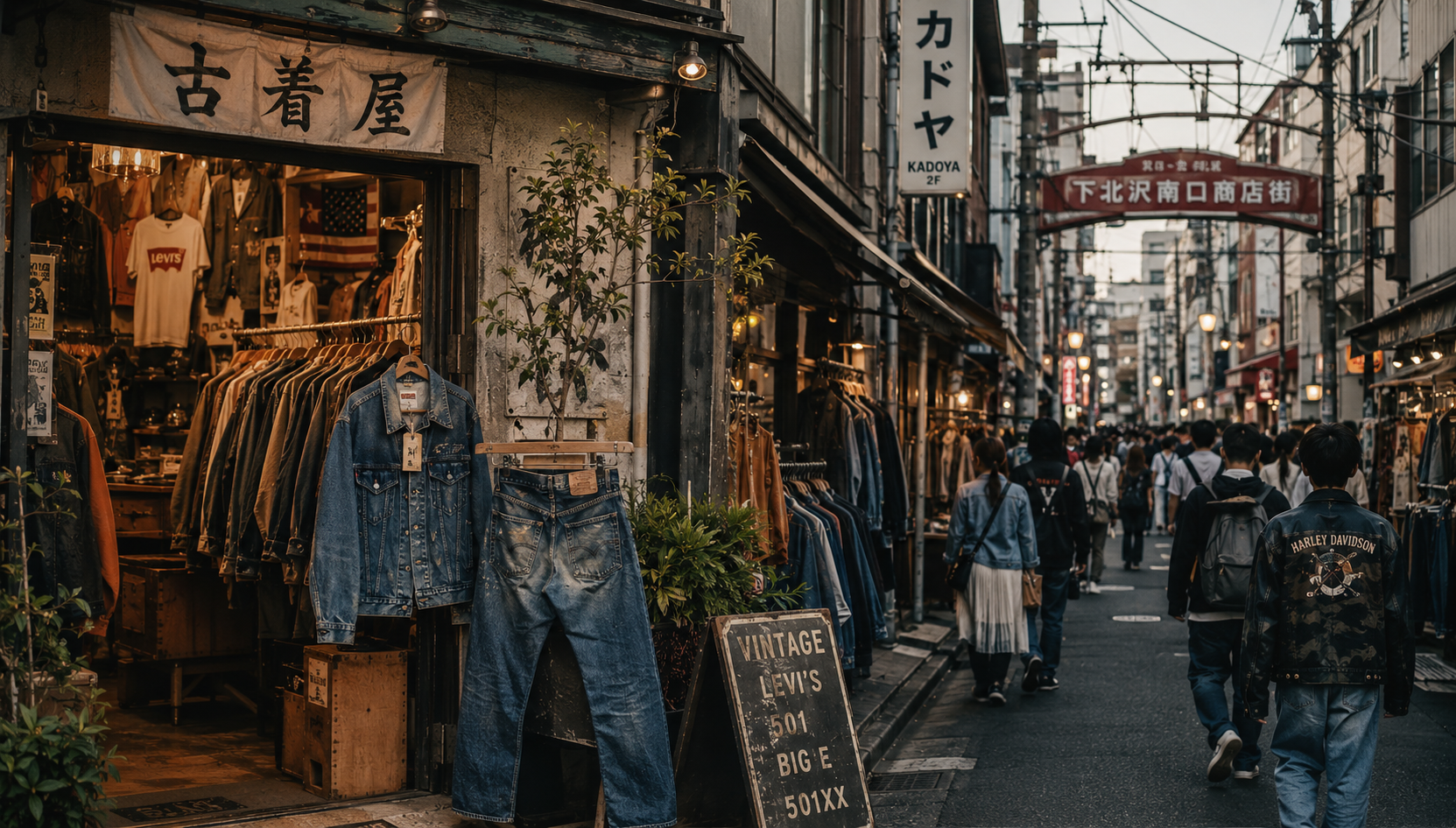
We have all been there. You buy something cheap, it looks great on the hanger, and three months later the stitching is coming apart and the colour has faded to something vaguely grey. You spent money on something that was never really built to last — and now you have to spend again.
This is the quiet lie of fast fashion: that cheap equals accessible, and that accessible is good enough. But affordable and disposable are not the same thing — and for millions of shoppers, there is a smarter, more sustainable option hiding in plain sight.
It is sorted secondhand clothing. And it is a bigger deal than most people realise.
Fast Fashion’s Hidden Cost
Fast fashion is built on a simple formula: produce as much as possible, as cheaply as possible, as fast as possible. The result is clothing that moves quickly off shelves — but also quickly into waste. Today, clothing is worn only 7 to 10 times before being thrown away — a decline of more than 35% in just 15 years [1]. An estimated 92 million tonnes (t) of textile waste is generated worldwide every single year [2].
What does this mean for the person trying to dress well on a budget? Quite simply, they are being sold the illusion of value. A shirt that costs less upfront but falls apart in six months is not affordable — it is expensive when you do the maths.
Real value means a garment that lasts. And that is something the secondhand market has in abundance.
Secondhand Is Not a Compromise — It Is an Upgrade
Here is something worth sitting with: a well-made jacket from ten years ago has already proven itself. It survived seasons, washes, and real-world wear. The fabric held. The seams held. The quality is not a promise — it is a track record.
Older garments — particularly those produced before the fast fashion era peaked — were often made to higher construction standards than what floods the market today. When you choose quality secondhand clothing, you are not settling for less. In many cases, you are choosing more: more durability, more character, and more garment per dollar spent.
And the environmental case is just as compelling. Research shows that choosing secondhand clothing instead of buying new leads to up to 42% lower climate change impact and up to 53% lower water scarcity footprint per garment [3]. Reusing what already exists saves every one of those resources.
Where P&P Textiles Fits In
This is the part of the story that often goes untold. Between a donated garment and the person who eventually wears it again, there is an essential step: sortation.
P&P Textiles is a used clothing sortation company. We sit in the middle of the secondhand supply chain — and that position matters more than most people appreciate. Not all secondhand clothing arrives in a usable state. It comes in mixed, unsorted, and in varying conditions. Our job is to make sense of it: to assess, grade, and organise garments so they can reach the right people in the right condition at the right price.
Think of it this way — sortation is what turns a pile of donated clothing into:
- Quality stock for secondhand retailers and resellers
- Affordable bundles for community organisations and aid programmes
- Wearable, graded clothing that buyers can trust without seeing every piece individually
- A clear signal that secondhand can be professional, reliable, and consistent
Without sortation, the secondhand market would be chaotic and inconsistent. With it, secondhand clothing becomes a dependable, scalable solution — one that serves budget-conscious consumers and the planet at the same time.
The Bigger Picture: Sortation as Sustainability
It is easy to think of sustainability as something that only happens in factories or at the policy level. In reality, it happens in warehouses too — in the hands of people carefully sorting garments, extending their useful life, and redirecting them away from landfill.
The European Environment Agency highlights that sorting and reuse are essential steps in keeping textiles in circulation and out of landfill — with the EU alone generating nearly 7 million tonnes of textile waste annually, the majority of which was previously worn clothing [4]. That is not a marginal problem — and reuse is not a marginal solution.
P&P Textiles is not a charity, and we are not asking anyone to sacrifice quality for a good cause. We are simply doing the unglamorous, necessary work of keeping good clothing in circulation — and making it available to the people who need it most, at prices that reflect real life.
Changing the Way We Think About Value
The shift we are asking for is actually quite small. It is not about giving up style. It is not about wearing things that do not fit. It is simply about asking a different question when you shop:
Does this last — or does it just look good right now?
Sorted secondhand clothing — when handled with care and integrity — answers that question well. It is already proven. It is already priced for real people. And it is already doing its part for the planet, simply by existing for another round.
So, What Now?
Next time you need something to wear, consider looking at what already exists before buying something new. Visit pptextiles.com to see what sorted secondhand clothing looks like when it is done properly — or get in touch with our team if you are a buyer, retailer, or organisation looking for a reliable supply of quality used garments.
Affordable fashion does not have to fall apart. It just has to be sorted right.
What You Can Do — Starting Today with P&P Textiles
Ready to make the switch? Here is how to get started:
- Explore what P&P Textiles has available — Visit pptextiles.com to see our current range of sorted second-hand clothing. From everyday basics to quality finds, there is something for every need and budget.
- Get in touch with our team — Whether you are an individual buyer, a small retailer, or a community group sourcing affordable clothing, we are happy to talk. Reach out through pptextiles.com and let us find the right solution together.
- Think before buying new — Next time you need a new piece of clothing, ask yourself: could a well-sorted second-hand option do the job just as well? More often than not, the answer is yes.
- Share the idea — Tell a friend, share this post, or tag us using #SecondhandFirst #WearItAgain #TradeTrust. Changing how people see second-hand clothing starts with a conversation.
References
[1] Uniform Market, “Fast Fashion Overconsumption Statistics,” Uniform Market, 2025. [Online]. Available: https://www.uniformmarket.com/statistics/fast-fashion-statistics
[2] United Nations Environment Programme (UNEP), “Unsustainable Fashion and Textiles in Focus for International Day of Zero Waste 2025,” UNEP, Nairobi, Kenya, Mar. 2025. [Online]. Available: https://www.unep.org/news-and-stories/press-release/unsustainable-fashion-and-textiles-focus-international-day-zero
[3] T. Klooster et al., “Do We Save the Environment by Buying Second-Hand Clothes? The Environmental Impacts of Second-Hand Textile Fashion and the Influence of Consumer Choices,” Journal of Circular Economy, vol. 2, no. 3, Jul. 2024. [Online]. Available: https://circulareconomyjournal.org/articles/do-we-save-the-environment-by-buying-second-hand-clothes
[4] European Environment Agency (EEA), “Management of Used and Waste Textiles in Europe’s Circular Economy,” EEA Briefing No. 03/2024, Copenhagen, Denmark, 2024. [Online]. Available: https://www.eea.europa.eu/en/analysis/publications/management-of-used-and-waste-textiles-in-europes-circular-economy