

Here is a little secret the fashion industry does not always want you to know: some of the best clothing available today has already been worn before. Not worn out — just worn once. Maybe twice. Then donated, collected, and waiting for someone who actually needs it.
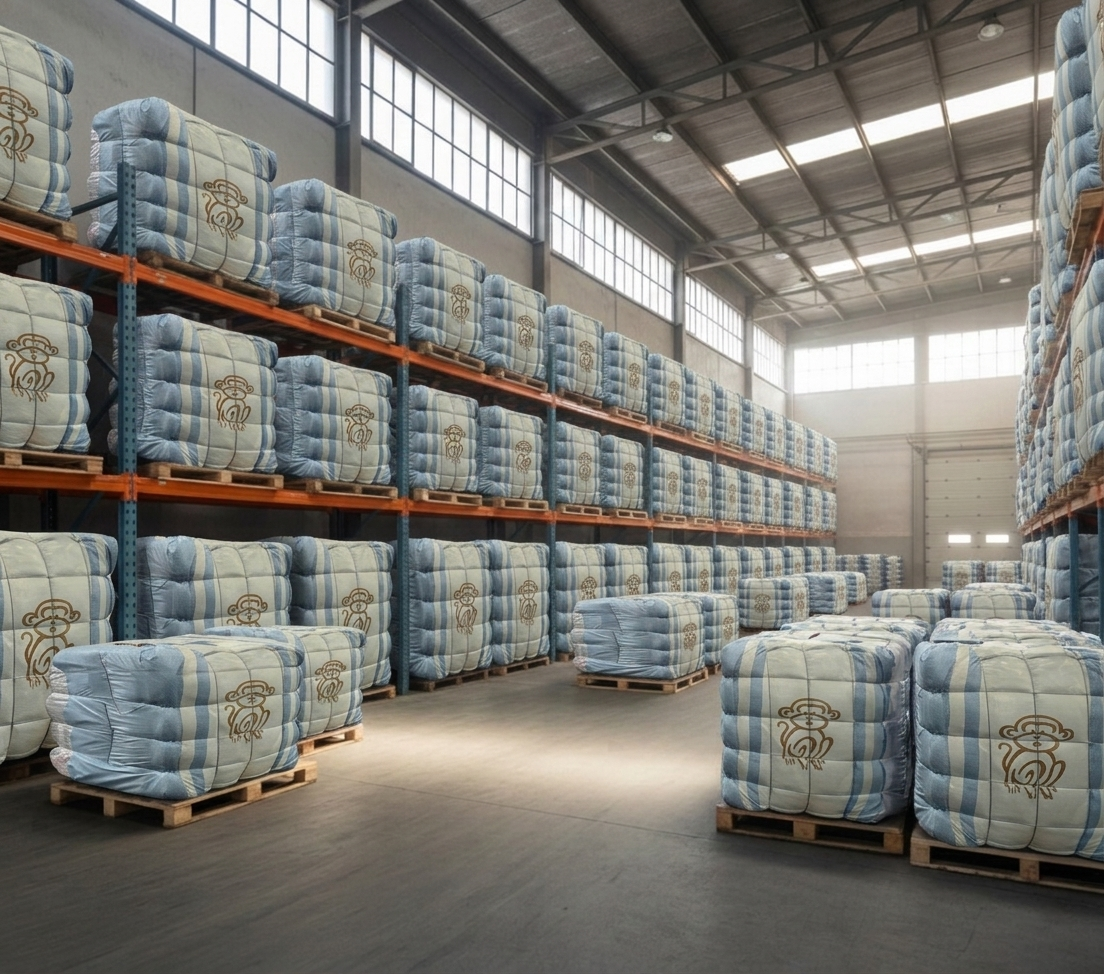
That is exactly where P&P Textiles comes in. We are a used clothing sortation company. Our job is to carefully sort, grade, and match quality second-hand garments with the people and communities that can put them to best use — at prices that make sense. No gimmicks, no greenwashing, just good clothes finding good homes.
Fast Fashion Promised a Lot. Did It Deliver?
Over the past two decades, fast fashion trained consumers to expect cheap, trend-driven clothing at rapid turnover. The result? Globally, consumers today buy approximately 60% more clothing than they did 15 years ago — yet keep each garment for roughly half as long [1]. That is a lot of clothing produced, purchased, and discarded at a pace the planet simply cannot keep up with.
The uncomfortable truth is that a low price tag does not always mean good value. Many fast fashion garments are designed to last one season — sometimes less. Stitching that unravels after a handful of washes, fabric that pills, colours that fade. The savings at the checkout rarely survive the year.
Second-hand clothing tells a different story. A well-made jacket from ten years ago — sorted, graded, and priced honestly — will almost always outlast a fast fashion equivalent bought new today. Durability was simply built differently.
The Real Cost of Clothing — and How Reuse Changes the Equation
Producing a single new cotton T-shirt requires approximately 2 700 litres (L) of water [2]. Manufacturing 1 kg of polyester fabric generates around 9.52 kg of carbon dioxide equivalent (CO₂e) in greenhouse gas emissions [3]. When a garment is reused instead of discarded and replaced with something new, every one of those resources is effectively saved.
The Ellen MacArthur Foundation estimates that extending the active life of clothing by just nine months reduces its carbon, water, and waste footprint by approximately 20–30% [4]. Reuse is not a compromise — it is one of the most impactful things the textile sector can do, and it requires no new factories, no new fibres, and no new emissions.
At P&P Textiles, this is our core business. Every kilogram of sorted second-hand clothing that finds a new owner is a kilogram that does not end up in landfill — and a wardrobe need that does not generate new production demand.
Sorted with Care: What We Actually Do
Sortation is not glamorous, but it matters enormously. Not all second-hand clothing is equal — which is exactly why professional sorting exists. At P&P Textiles, incoming garments are assessed for condition, quality, and category before being graded and matched to the right market. What arrives as a mixed bale of used clothing leaves as a curated, purposeful product.
This process is what turns uncertainty into trust. Buyers — whether individuals, retailers, or community organisations — know that what they receive from P&P Textiles has been handled with care and honesty. That is our value proposition, and it is one that no fast fashion brand can replicate.
What You Can Do — Starting Today with P&P Textiles
Ready to make the switch? Here is how to get started:
- Explore what P&P Textiles has available — Visit pptextiles.com to see our current range of sorted second-hand clothing. From everyday basics to quality finds, there is something for every need and budget.
- Get in touch with our team — Whether you are an individual buyer, a small retailer, or a community group sourcing affordable clothing, we are happy to talk. Reach out through pptextiles.com and let us find the right solution together.
- Think before buying new — Next time you need a new piece of clothing, ask yourself: could a well-sorted second-hand option do the job just as well? More often than not, the answer is yes.
- Share the idea — Tell a friend, share this post, or tag us using #SecondhandFirst #WearItAgain #TradeTrust. Changing how people see second-hand clothing starts with a conversation.
Turning Trade Into Trust
At P&P Textiles, we are not selling the idea of sustainability — we are living it, one sorted bale at a time. Every garment we handle represents a choice: to extend its useful life, to make quality accessible, and to build a business on honesty rather than hype.
Used does not mean used up. And affordable does not mean inferior. When you know that the people sorting and supplying your clothing genuinely care about getting it right, a transaction becomes something far more valuable.
It becomes trust.
References
[1] McKinsey & Company, “Style that’s sustainable: A new fast-fashion formula,” McKinsey Sustainability, New York, USA, Oct. 2016.
[2] World Wildlife Fund (WWF), “Cotton Farming,” WWF Global, Gland, Switzerland, 2022. [Online]. Available: https://www.worldwildlife.org/industries/cotton
[3] M. Sandin and G. M. Peters, “Environmental impact of textile reuse and recycling — a systematic literature review,” Journal of Cleaner Production, vol. 184, pp. 353–365, May 2018.
[4] Ellen MacArthur Foundation, “A New Textiles Economy: Redesigning Fashion’s Future,” Ellen MacArthur Foundation, Cowes, UK, 2017.