

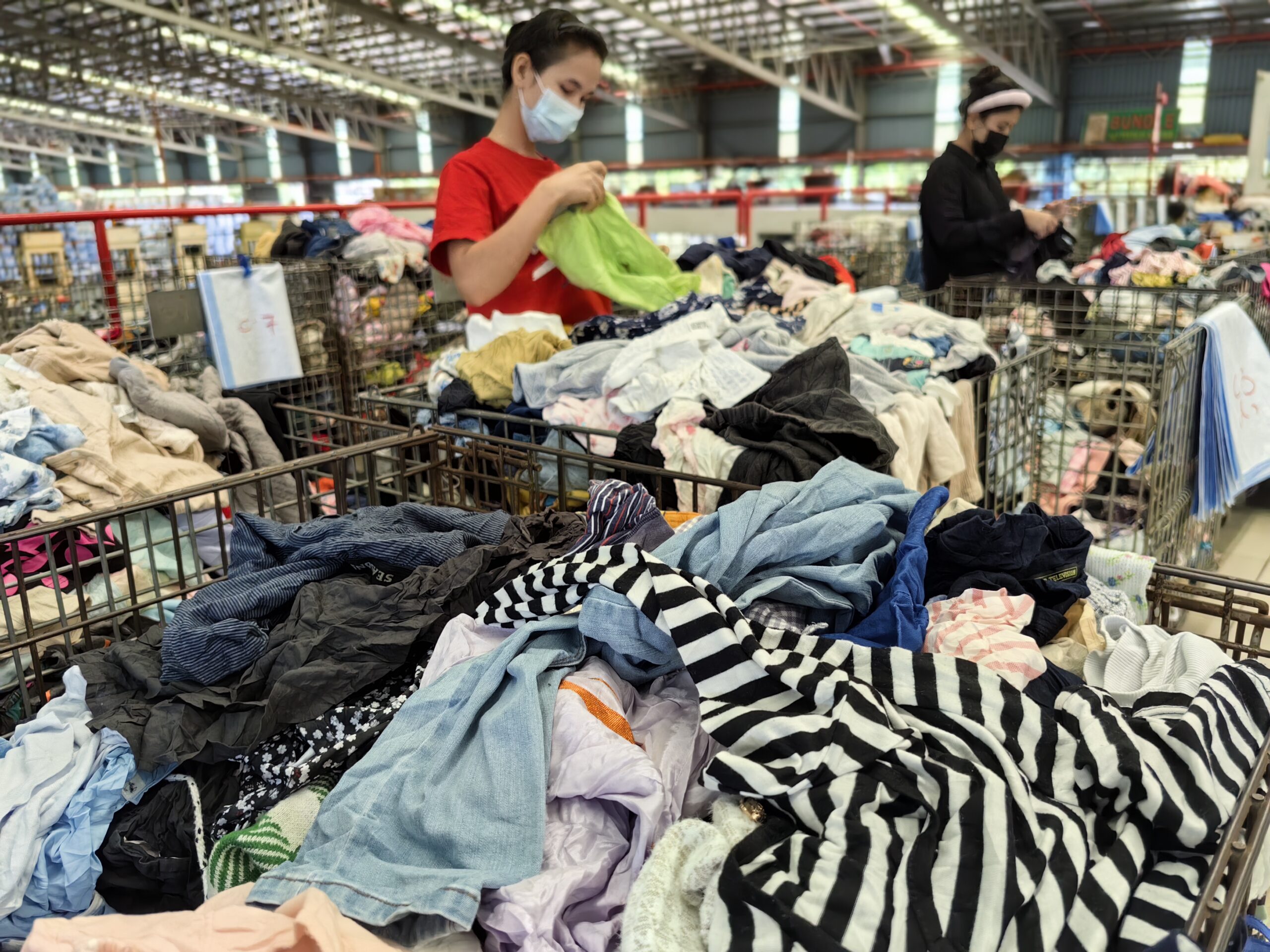
The global secondhand apparel market is no longer a niche — it is a multi-billion dollar industry reshaping how the world gets dressed. And if you are in the used clothing trade, right now is one of the most exciting times to be in the business.
The Numbers Do Not Lie: Secondhand Is Surging
Let us start with the big picture. The global secondhand apparel market is on an extraordinary growth trajectory — projected to expand from approximately USD 198.6 billion in 2025 to nearly USD 486 billion by 2031, representing a compound annual growth rate (CAGR) of 16.1%.[1] That is not slow, steady growth. That is a full-on industry transformation.
What is fuelling it? A perfect storm of consumer behaviour shifts:
-
- Rising cost of living pushing shoppers towards more affordable options
- A genuine, growing concern for sustainability and reducing textile waste
- Younger generations — Gen Z and Millennials — normalising secondhand as a first choice, not a last resort[2]
- The explosion of online resale platforms making used clothing easier to buy and sell than ever before
In fact, the online resale sector grew by 23% in 2024, significantly outpacing the broader retail clothing market.[2] The market is not just growing — it is widening, drawing in entirely new categories of shopper who have never bought secondhand before.
2026 Trends Shaping the Used Clothing Trade
So what is actually happening on the ground this year? Here are the trends every buyer, reseller, and wholesaler should be paying attention to:
1. Vintage and Antique Fashion Is Having a Moment
The definition of ‘desirable secondhand’ keeps evolving. In 2026, observers are noting a growing appetite for truly vintage and antique styles — think heritage silhouettes and heirloom aesthetics. This is pushing the most sought-after stock older and rarer, which has real implications for how suppliers grade and price bales.
2. The Wholesale Market Is More Competitive — and More Valuable
With resale platforms growing fast and more small businesses entering the used clothing trade, demand for reliable wholesale suppliers has never been stronger. Analysis from Kings Research forecasts that the wholesale and distribution channel alone will reach USD 232.8 billion in market value by 2031.[3] Retailers and online resellers need consistent, quality stock — and that is exactly where wholesale importers play a critical role.
3. Sustainability Is No Longer Just a Buzzword
Research by Universitat Politècnica de Catalunya (UPC) found that reusing 1 kg of clothing saves approximately 25 kg of CO[4]2 equivalent — far higher than previous EU estimates. Separately, the United Nations Environment Programme notes that it takes around 7,500 litres of water to manufacture a single pair of jeans.[5] Consumers are increasingly aware of these figures, and choosing secondhand is one of the simplest ways to reduce their fashion footprint.
4. South-East Asia Is a Rising Hub
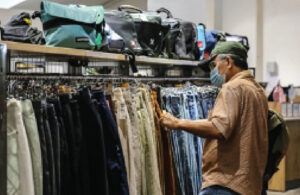
Countries such as Malaysia are increasingly important in the global used clothing supply chain — both as a trading hub and a growing domestic market. According to Stellar Market Research, the Asia-Pacific region is among the fastest-growing markets for secondhand apparel, with Malaysia specifically listed as a tracked market.[6] Local buyers are more savvy, prices are competitive, and demand for mixed and graded bales from trusted suppliers continues to climb year on year.
What This Means If You Are Looking to Source
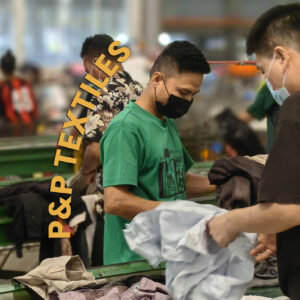
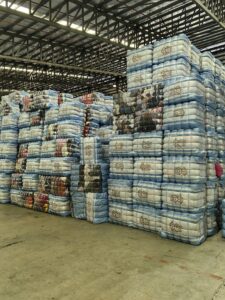
Whether you are a boutique owner hunting for curated stock, a reseller building your online shop, or a trader looking to fill a container — the opportunity in used clothing right now is real. But quality, consistency, and trust matter more than ever.
With more players entering the market, buyers are learning the hard way that not all used clothing is equal. Grading matters. Sourcing origins matter. The condition and mix of bales you receive directly impacts your margins and your customers’ satisfaction.
This is why working with an experienced, reliable supplier is not just convenient — it is a competitive advantage.
Ready to Source Quality Used Clothing?
If you are looking for a trusted partner in the used clothing trade, P&P Textiles are here to help. We have been in the business long enough to know what good stock looks like — and how to get it to you consistently.
Here is how to take the next step:
- 🌐 Browse our stock and learn more at pptextiles.com
- 📦 Ask us about our bale grades, categories, and mixed lots
- 🤝 Connect with the P&P Textiles team for local sourcing enquiries
- 📲 Reach out via WhatsApp or our website contact form — we respond promptly
The secondhand market is booming. The question is: are you positioned to take advantage of it? Let P&P Textiles be the supplier that helps you get there.
Tags & Hashtags
#UsedClothing2026 #SecondhandFashion #ThriftTrends #CircularFashion #PreOwnedClothing #SustainableFashion #UsedClothingWholesale #ThriftBusiness #SecondhandMarket #PPTextiles #MonkeyWarehouseMalaysia #UsedClothingMalaysia #ThriftMalaysia #BaleClothing #WholesaleClothing #ResaleMarket2026 #VintageFashion2026 #FashionCircularEconomy
References
[1] TechSci Research, “Secondhand Apparel Market – Global Industry Size, Share, Trends, Opportunity, and Forecast, 2021–2031,” GlobeNewswire, Jan. 23, 2026. [Online]. Available: https://www.globenewswire.com/news-release/2026/01/23/3224864/en/Secondhand-Apparel-Market-Analysis-Report-2026.html. [Accessed: Mar. 2026].
[2] ThredUp, “2025 Resale Report,” ThredUp, Mar. 2025. Cited in GlobeNewswire, Jan. 23, 2026. [Online]. Available: https://www.globenewswire.com/news-release/2026/01/23/3224864/en/Secondhand-Apparel-Market-Analysis-Report-2026.html. [Accessed: Mar. 2026].
[3] Kings Research, “Secondhand Apparel Market Size & Share Forecast, 2031,” Kings Research, 2025. [Online]. Available: https://www.kingsresearch.com/secondhand-apparel-market-455. [Accessed: Mar. 2026].
[4] INTEXTER – Universitat Politècnica de Catalunya, “Reusing 1 kg of Clothing Saves 25 kg of CO₂, Study Finds,” reported by Phys.org, Sep. 14, 2022. [Online]. Available: https://phys.org/news/2022-09-reusing-kg-co2.html. [Accessed: Mar. 2026].
[5] United Nations Environment Programme (UNEP), “Facts and Figures: Fashion,” UN ActNow, n.d. [Online]. Available: https://www.un.org/en/actnow/facts-and-figures. [Accessed: Mar. 2026].
[6] Stellar Market Research, “Second Hand Apparel Market Industry Analysis and Forecast (2026–2032),” Stellar Market Research, 2025. [Online]. Available: https://www.stellarmr.com/report/Second-Hand-Apparel-Market/1885. [Accessed: Mar. 2026].